



Sex is omnipresent in Thailand. But talking openly about sex is often another story. Many young people grow up with questions about relationships, sexuality, and sexual health, but feel too shy or embarrassed to ask them. Parents and teachers also sometimes find it difficult to talk about these topics. That is why, with Siam-Care, we offer sexual education and HIV prevention training in Thailand. Like last week in eastern Thailand.
Earlier this month, our team visited a school in Nakhon Phanom to talk to students about sexual health, HIV, sexually transmitted diseases, and the risks of unprotected sex. We create a safe environment where students can ask questions and talk about topics that are often difficult to discuss openly. (text continues below the photo)
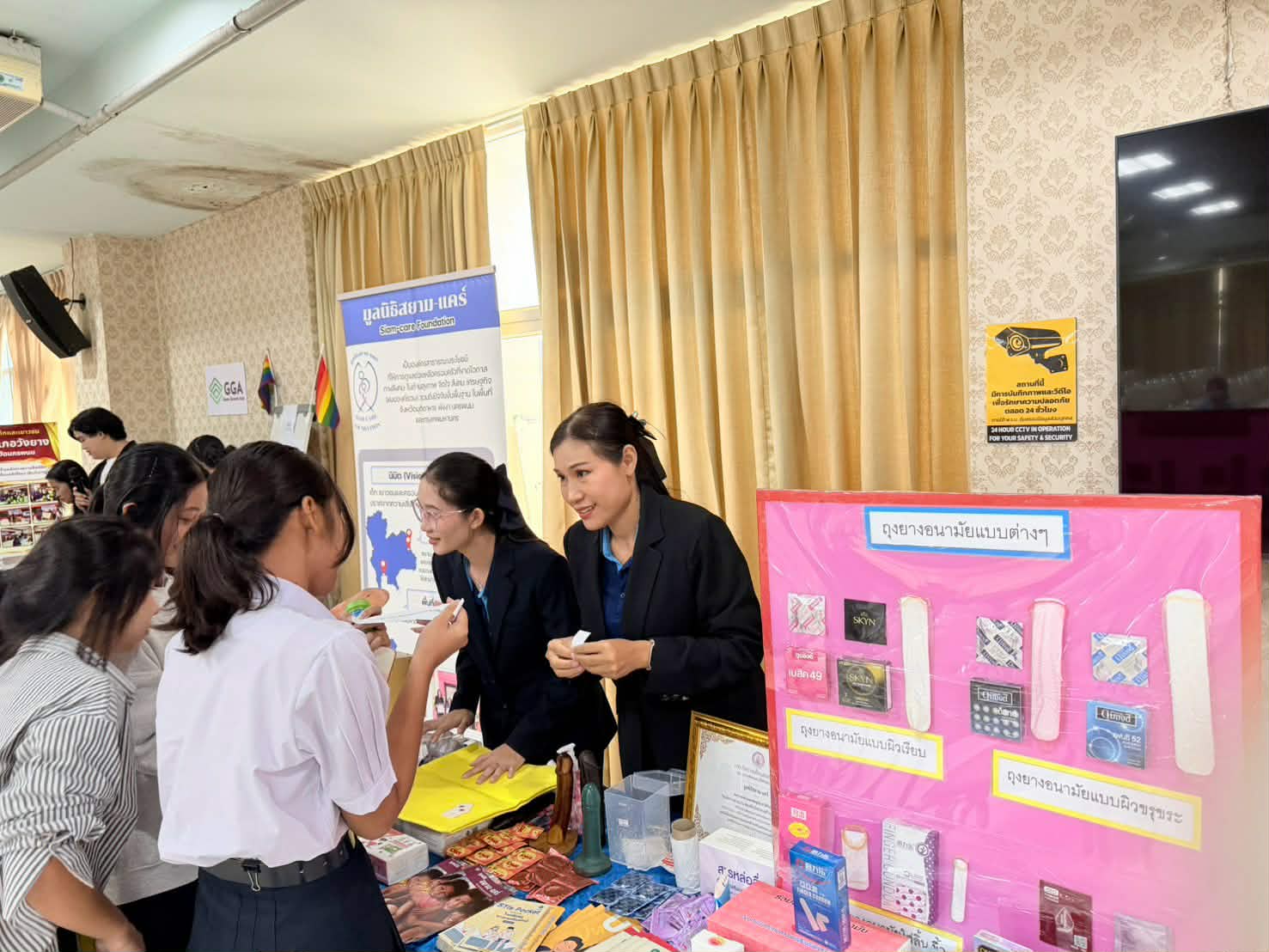
Everywhere
Our prevention work takes place in many different settings. We regularly visit schools, but also prisons, churches, communities, and other places where we can reach people who could benefit from accurate information. Our teams also train teachers and community leaders so that the conversation can continue after we have left.
Stop the virus from spreading
Siam-Care does not only work with people who are already living with HIV. We much prefer to prevent new infections from occurring in the first place. This means ensuring that people understand how HIV is transmitted, how they can protect themselves and others, and what risks are associated with unprotected sex.
Responsible choices
Goede seksuele voorlichting gaat er niet om jongeren aan te moedigen om seks te hebben. Het gaat erom hen accurate informatie te geven, hen te helpen verantwoorde keuzes te maken en hen het vertrouwen te geven om hun eigen gezondheid en de gezondheid van anderen te beschermen. De Wereldgezondheidsorganisatie (WHO) beschouwt accurate, leeftijdsgeschikte seksuele voorlichting eveneens als een belangrijk instrument om risico’s voor de seksuele gezondheid te verminderen.
Essential part
For Siam-Care, prevention is an essential part of our work. We care for families who are already affected by HIV, but we also want to ensure that fewer families have to experience the consequences of HIV in the future.